The rise of AI has sparked a natural concern: What happens to the human element?
For nonprofits, whose work is grounded in empathy, relationships, and lived experience, this question is especially important.
But AI doesn’t have to replace people. In fact, the most effective use of AI happens when it works with humans, not instead of them.
This model is called co-intelligence. And for nonprofit organizations, it is not just a strategy. It is a necessity.
Why Co-Intelligence AI Matters for Nonprofits
AI is powerful, but it is not personal.
Nonprofits deal with real people, real stories, and real consequences. This work requires empathy and discretion—two things AI can’t replicate.
That’s why co-intelligence is so important. When AI supports, rather than replaces, human decision-making, nonprofits can scale impact without sacrificing care.
AI can:
- Spot patterns you might miss
- Automate repetitive tasks so you can focus on things that need the human decision making.
- Surface insights from messy or unstructured data
- Provide recommendations that help your team act faster and smarter
What Co-Intelligence AI for Nonprofits Looks Like in Practice
The best use of AI in nonprofits is behind the scenes, supporting staff, not replacing them.
Here are a few practical examples of what that can look like:
- Program teams: AI flags families or youth who may be at risk of dropping out based on attendance or engagement. Staff are alerted early so they can intervene with care.
- Fundraising teams: AI analyzes giving trends, churn risk, and donor behaviors, helping fundraisers personalize outreach and prioritize follow-ups.
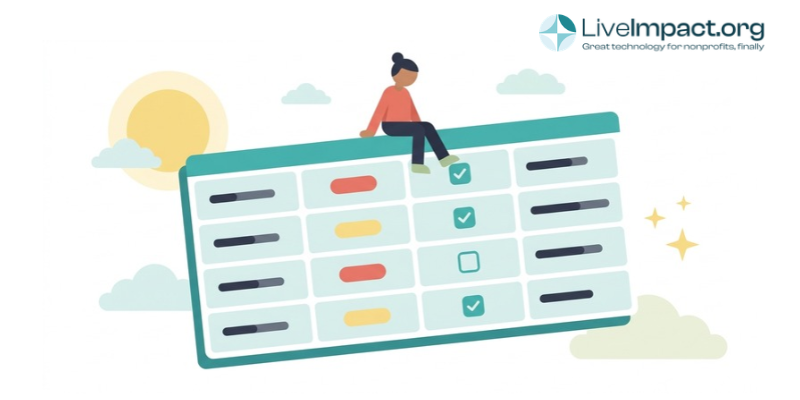
- Case management: AI creates dynamic task lists based on case notes, surfaces similar case histories, and reminds staff about key deadlines or missing documentation.
Leadership: AI-generated dashboards summarize trends across programs, helping leaders make data-driven decisions without waiting weeks for reports.
These are not replacements. They are accelerators.
Protecting Empathy, Equity, and Judgment When Using AI in Nonprofits
While AI can offer speed and scale, it should never take over sensitive decision-making.
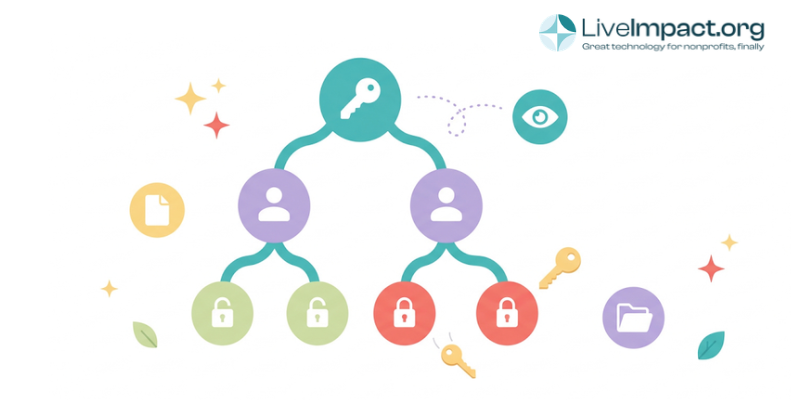
To use AI responsibly, nonprofits must ensure systems are aligned with their values and that humans remain in control.
Ask yourself:
- Are humans reviewing and validating key outputs?
- Is the AI tool explainable? Can your team understand how it’s reaching its conclusions?
- Are you checking for bias in the data or recommendations?
- Is AI being used to support, not automate, decisions involving eligibility, access, or prioritization?
Guardrails like these help preserve trust and fairness in your work.
Free Up Time, Focus on What Matters
Many nonprofit teams are stretched thin. Staff spend countless hours on tasks that, while necessary, don’t require their full expertise.
That’s where AI shines.
By automating the routine, AI gives your team back valuable time and focus. It enables:
- Deeper client engagement
- More creative campaigns
- Stronger cross-team collaboration
- Strategy and long-term planning
The result is more meaningful work, done more effectively and with less burnout.
Final Thought
AI should not replace the human touch. It should make more room for it.
When applied thoughtfully, AI can enhance how nonprofits work, connect, and serve.
Co-intelligence is not about ceding control. It is about working smarter, staying grounded in your mission, and giving your people the tools to do what they do best.
That is the future AI should serve. And it is one nonprofits deserve.
Recently, we’ve helped several nonprofits adopt co-intelligent AI to empower their teams and streamline operations. If you’re exploring how AI can support your mission, we offer a free, no-pressure 30-minute consultation with our experts to get you started.